Ask any experienced off-road rider and they'll tell you: a suspension setup that feels perfect at the local motocross track can feel completely wrong out in the desert — and vice versa. If you've ever wondered why your bike seems to fight you no matter which environment you're in, the answer usually comes down to suspension tuning, not riding ability.
Two Very Different Demands on Your Suspension
Motocross tracks and desert terrain ask your suspension to do fundamentally different jobs, which is exactly why a one-size-fits-all setup rarely performs well in both.
Motocross tracks are defined by:
- Sharp, aggressive jumps and jump faces
- Tight, technical sections requiring quick direction changes
- Consistent, groomed dirt with predictable bump spacing
- Short bursts of intense impact absorption
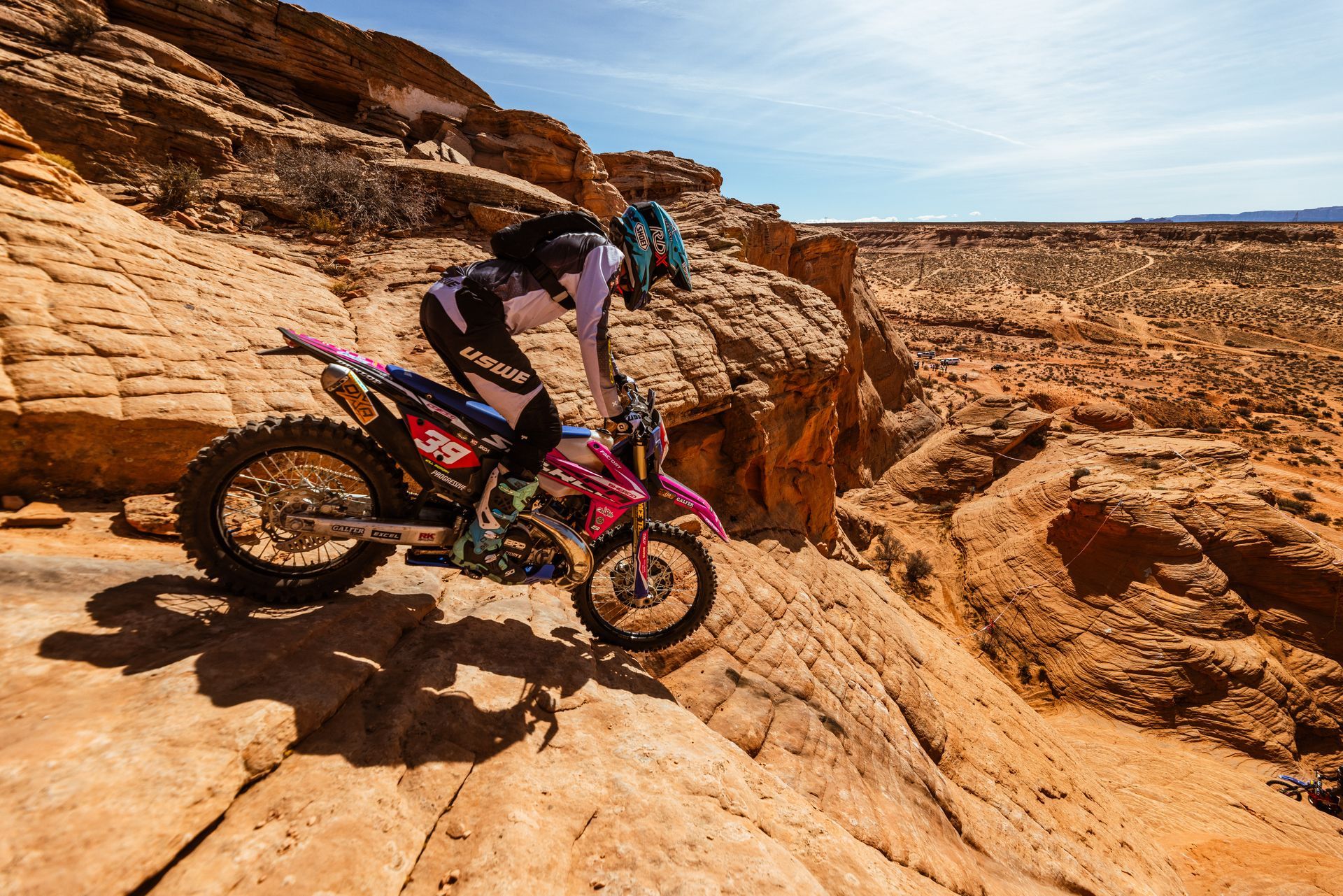
Desert riding is defined by:
- Long stretches of high-speed, open terrain
- Unpredictable, ever-changing surface conditions
- Far greater distances covered per ride, increasing overall fatigue
Because the terrain and riding style are so different, the suspension characteristics that make a bike feel great in one setting can make it feel harsh, vague, or unstable in the other.
Whoops: A Different Challenge in Each Setting
Whoops (those repetitive small-to-medium bumps) show up in both motocross and desert riding, but they behave differently in each:
- On a
motocross track, whoops are usually tighter and more consistent, rewarding a suspension setup that can absorb quick, repetitive hits without kicking the bike off-line
- In the
desert, whoops are often larger, less predictable, and hit at much higher speed — which demands a setup with more controlled damping to prevent the bike from packing down and losing composure over a long series of hits
High-Speed Stability: Where Desert Setups Diverge Most
This is one of the biggest differences between the two disciplines. Desert riding regularly involves sustained high speeds over rough, unpredictable terrain, which means a suspension setup needs strong high-speed compression damping to keep the bike planted and predictable. A motocross-tuned suspension — optimized more for low-speed control around jumps and technical sections — can feel nervous or unstable at true desert speeds.
Handling Sand and Rocks
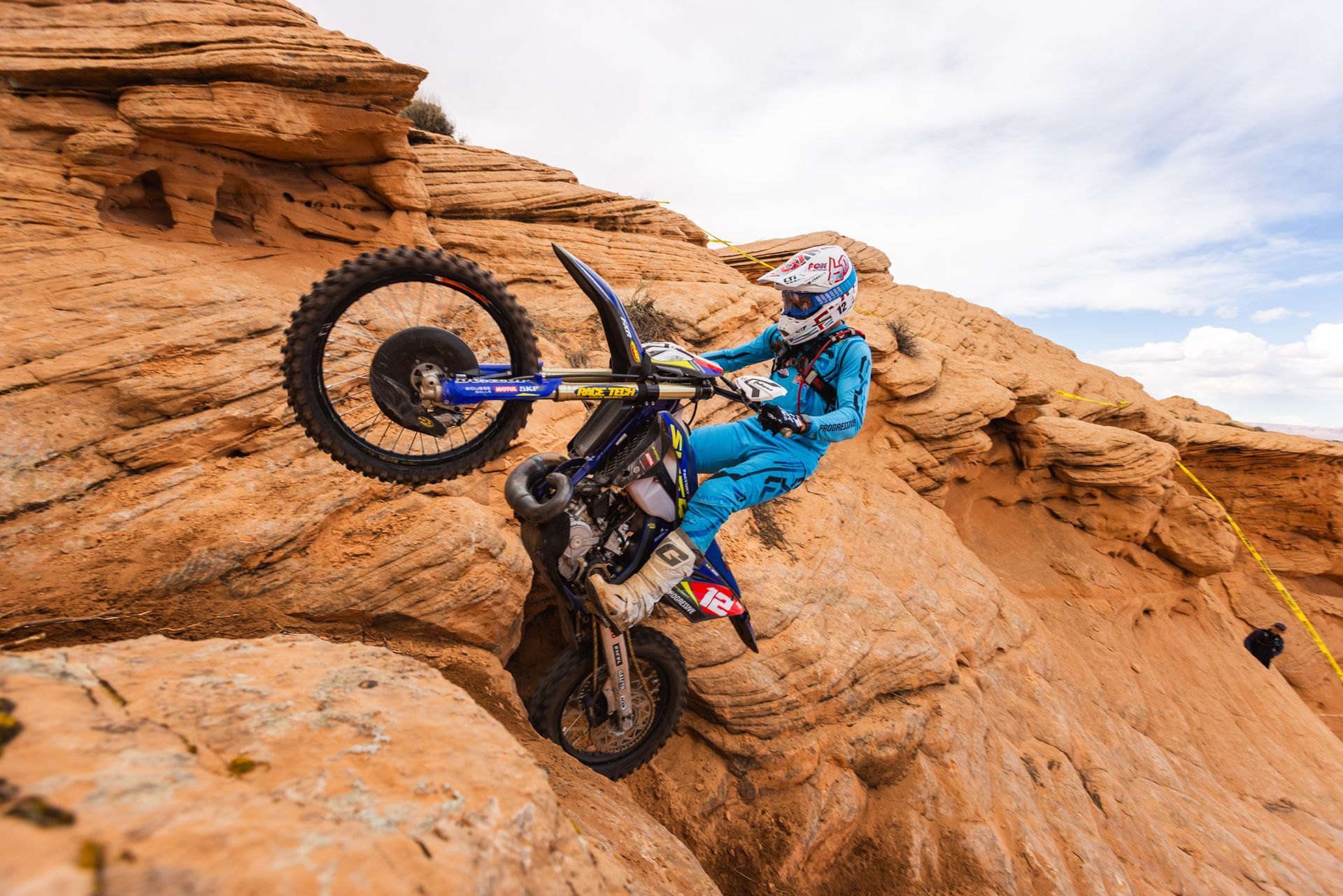
- Sand requires a suspension that can stay controlled through a softer, shifting surface without wallowing or losing traction — sand absorbs energy differently than hardpack dirt, which changes how compression and rebound damping should be tuned
- Rocks and rough, technical desert terrain demand strong bottoming resistance and enough small-bump sensitivity to keep the wheel tracking the ground, rather than deflecting off every sharp edge
Neither of these conditions comes up in the same way on a groomed motocross track, which is part of why desert-specific tuning matters so much.
Bottoming Resistance: Different Risks, Different Fixes
Bottoming out happens in both environments, but for different reasons:
- On a
motocross track, hard landings off jumps are the primary concern — suspension needs enough progressive resistance to handle a big hit without harshly bottoming
- In the
desert, bottoming often comes from an unexpected rock, ledge, or whoop hit at speed — which means the suspension needs to manage sudden, unpredictable impacts rather than the more predictable landings of a motocross jump
Rider Fatigue: The Desert's Hidden Factor
Desert rides often last hours rather than minutes, which makes rider fatigue a real suspension consideration — not just a rider conditioning issue. A suspension that transmits excessive harshness or requires constant correction will wear a rider down far faster over a three-hour desert loop than it would over a few motocross laps. Properly tuned desert suspension should absorb terrain smoothly enough that the rider isn't fighting the bike mile after mile.
Why Off-the-Shelf Settings Rarely Work for Both
Because motocross and desert riding place such different demands on a suspension system, a generic factory setup — or a setup tuned only for one discipline — will almost always be a compromise in the other. Getting real performance in both environments (or dialing in a setup specifically for whichever one you ride most) comes down to proper valving, spring rates, and damping adjustments matched to your riding style, weight, and terrain.
Get Your Suspension Dialed In at Crow Performance
At Crow Performance in Vista, CA, we specialize in suspension tuning for exactly this kind of terrain-specific performance — whether you're chasing lap times at the track or putting in long miles across the desert. In partnership with Race Tech, our rebuilds and revalves are built around how and where you actually ride, not a generic factory setting.
Ready to stop fighting your suspension?
Contact Crow Performance today to get your setup tuned for the terrain you ride most.