Heat and dust are two of the hardest conditions on a dirt bike engine. Heat pushes cooling systems and oil past their limits, and dust acts like sandpaper inside the engine if it gets past the air filter. Together, they cause power loss, overheating, and premature wear. For riders in San Diego County and the Southern California desert, understanding how each one works is the first step toward protecting your engine and keeping it running strong.
How Heat Affects Dirt Bike Engine Performance
Overheating and Coolant Loss
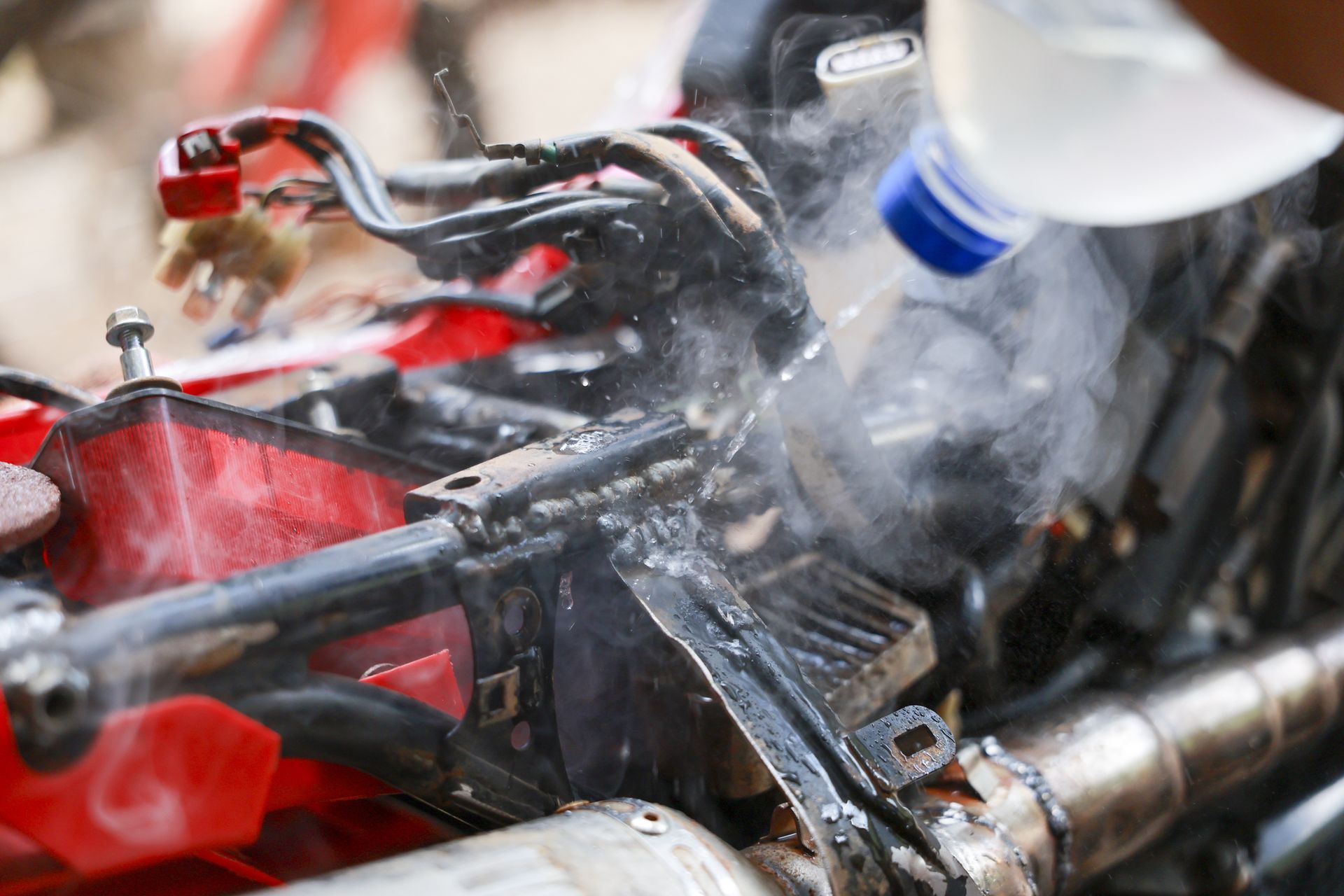
Liquid-cooled dirt bikes depend on coolant moving through the engine and radiators. In hot weather, especially during slow technical riding or sand, there’s less airflow across the radiators, so temperatures climb quickly. When coolant boils, it can be pushed out the overflow, leaving the system low and the engine hotter still. Prolonged overheating can lead to warped components, damaged gaskets, and serious engine damage.
Thinning Oil and Increased Wear
Engine oil protects moving parts by maintaining a lubricating film. Extreme heat thins oil and speeds up its breakdown, which means less protection for the piston, rings, bearings, and transmission. Oil that’s been cooked or contaminated needs to be changed more often than a normal interval suggests.
Hot, Thin Air and Your Fuel Mixture
Hot air is less dense, so it carries less oxygen. That reduces power and changes the air-fuel mixture. On carbureted bikes, hot weather can push the mixture richer than ideal, and jetting changes are often needed as temperature and elevation swing.
Fuel-injected bikes adjust automatically to a degree, but they can still benefit from proper mapping and tuning when conditions change a lot. A bike that runs crisply at the coast can feel flat or sluggish on a hot desert day.
How Dust Damages a Dirt Bike Engine
A Clogged Air Filter Chokes Power
An air filter packed with dust restricts airflow, which robs power, hurts throttle response, and upsets the air-fuel mixture. In very dusty riding, a filter can clog much faster than you’d expect.
Dust That Gets Past the Filter Wears the Top End
This is the more serious problem. Dust that slips past a poorly sealed or poorly oiled filter, or around a loose intake boot, enters the combustion chamber. Fine abrasive particles scratch the cylinder wall and wear the piston and rings, which reduces compression and accelerates top-end wear. Dust can also contaminate the oil and affect other internal components.
Dust-Clogged Radiators Make Heat Worse
Dust and mud packed into radiator fins block airflow and reduce cooling. That’s how dust makes heat problems worse: the engine runs hotter exactly when it’s already working hardest.
Why Heat and Dust Are Worse Together
Hot, dry, dusty riding, like desert trails and dry SoCal tracks, hits every system at once. The cooling system is strained, the oil is working harder, and the air filter is collecting more debris, all in the same ride. Small issues compound quickly, which is why preventive maintenance matters most in these conditions.
Warning Signs Your Engine Is Struggling
- Loss of power or a bike that feels flat, especially when hot
- Coolant spitting out of the overflow or steam from the radiators
- Hard starting or rough idle
- Excess smoke or oil residue
- Unusual noises, like pinging, ticking, or rattling
- Needing more oil or coolant top-ups than normal
How to Protect Your Engine in Heat and Dust
- Clean and re-oil the air filter often. In dusty conditions, that can mean after every ride. Make sure the filter seats and seals properly.
- Check the intake boot and clamps for cracks, gaps, or looseness that could let dust bypass the filter.
- Change the oil more frequently if you ride in extreme heat or heavy dust.
- Check coolant level and condition with the engine cold, and never open a hot radiator cap.
- Clean radiator fins of dust and mud, and straighten bent fins when possible.
- Let the bike cool properly after hard riding, and avoid long idling in hot weather.
- Adjust your tune when conditions change. Big shifts in temperature or elevation can call for jetting or mapping changes.
- Inspect the top end regularly. Track hours and watch for signs of declining compression.
When to Have Your Engine Checked or Rebuilt
If your bike has lost power, smokes more than it used to, is hard to start, or has been ridden through serious overheating or dust ingestion, it’s time to have the engine inspected. Catching wear early can mean a top-end refresh instead of a full rebuild.
At Crow Performance, our
engine services include performance engine builds that are dyno-tested and tuned to your riding style and terrain, along with suspension work for
off-road and motocross riders.
Heat and Dust FAQs
Why does my dirt bike overheat in hot weather?
Heat reduces cooling capacity, and slow riding means less airflow across the radiators. Low coolant, clogged radiator fins, and a worn or weak radiator cap also contribute.
How often should I clean my air filter in dusty conditions?
Often, and in very dusty riding that can mean after every ride. A dirty or poorly sealed filter is one of the biggest causes of dust-related engine wear.
Does hot weather affect jetting?
Yes. Hot air is less dense, which changes the air-fuel mixture. Carbureted bikes in particular may need jetting changes when temperature or elevation shifts a lot.
Can dust ruin a dirt bike engine?
It can. Dust that gets past the air filter acts as an abrasive inside the engine and accelerates wear to the cylinder, piston, and rings.